

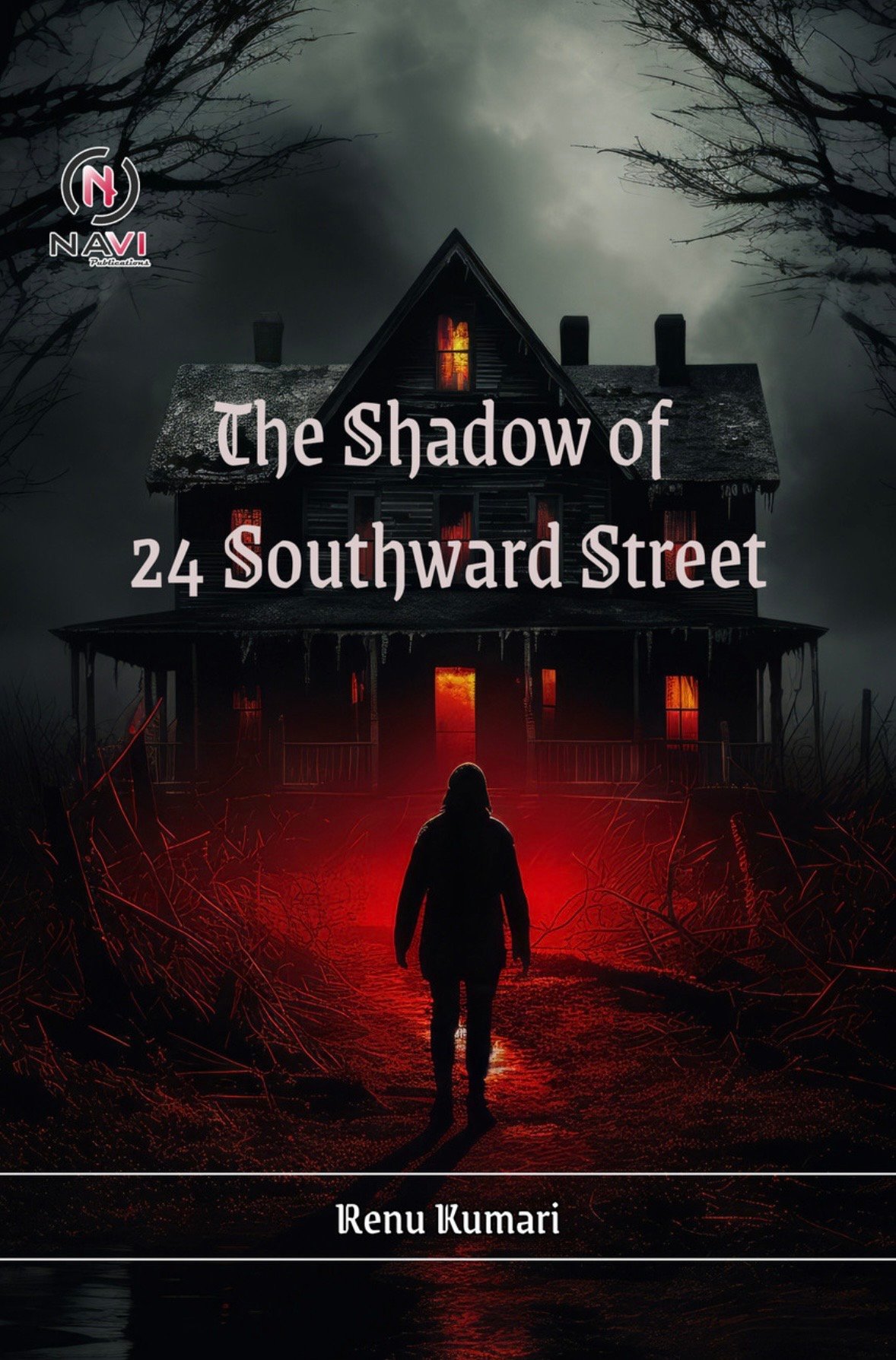
The Shadow of 24 Southward Street
129.00 ₹
The city of London, with its winding streets and towering facades, seemed alive with secrets. There was a certain murmur in the air, an unspoken promise that somewhere beneath its vibrant surface, stories whispered— stories of lost souls, of forgotten things, and of strange happenings that only the brave or the foolish dared to acknowledge. It was here, in this city that never slept, that I had found my home—a home that would come to haunt me in ways I could never have imagined. I was born in this city, but not in the bustling heart of it, not in the places where dreams flourished. I was raised in a forgotten corner, on 24 Southward Street, in an apartment that no one seemed to remember. Not a single person ever visited. No one asked about it. My neighbors never noticed me. Even the postman, when he came, would leave my mail in the corner of the hall, as though it were an afterthought. I was a part of the backdrop—a fleeting presence that was as easily ignored as the streetlights flickering on a foggy evening. I had grown used to the isolation. I had become one with the shadows, a ghost in my own life, existing in a small, lonely apartment that never felt like a home. It was a building of forgotten things, a place that seemed to resist the passage of time. The walls were thick, worn with age, and the floorboards creaked with every step, as though the house itself was alive, shifting beneath my feet. I had spent my entire life within these walls—sometimes in the dark, sometimes in the quiet hum of a forgotten day—and I never once questioned my solitude. But there was always something... otherworldly about it. The apartment at 24 Southward Street wasn’t just old—it was alive. It wasn’t just a building—it was a presence, an entity with its own will, its own agenda. It knew me. And it had known me long before I had ever understood what it meant to be trapped. I remember the first time I saw the doll. I was no more than six years old at the time. I had been rummaging through an old chest in the attic, a place I was never supposed to visit, but one that seemed to call to me anyway. Dusty books, yellowed photographs, and cracked mirrors filled the room, but it was one object that caught my eye—a porcelain doll. It sat there, with glassy eyes that shone unnaturally, dressed in an old-fashioned gown. Its smile was too wide, too perfect, and its hands were positioned in a way that suggested it was holding something—though nothing was ever quite visible. At first, I was terrified of it. I could feel its gaze following me, even as I tried to avoid looking directly at it. But curiosity, as it often does, won over fear. I reached out and took the doll in my hands. As soon as my fingers closed around its delicate porcelain, a cold chill shot through me. The room seemed to darken, as though the doll had drawn something from it, something ancient and powerful. I dropped it instantly, the doll crashing to the floor with a hollow, unsettling sound. But when I looked down, I found it was not broken. Not even a single crack marred its perfect surface. Over the years, the doll remained in my life, though it seemed to take on a strange significance. I couldn’t bear to look at it, yet I could never bring myself to throw it away. It was like the apartment—always there, always present, as if it belonged to me. As I grew older, I tried to ignore it, but I always knew it was watching, waiting. And then the whispers began. I had become a writer by the time I was twenty-two. I spent my days holed up in my apartment, writing gothic novels that no one knew came from me. I had published under a pseudonym, and my books, though popular, never revealed the real me—the girl living in isolation, the girl who had no friends, no visitors, and no family except for the cold walls that surrounded her. The stories I wrote were filled with shadows, ghosts, and abandoned places—places much like the one I called home. I didn’t know why I wrote them. It was as though the stories had already been written for me. I simply transcribed them as they came to me in restless dreams. There was one in particular that haunted me, a story of a girl trapped in an ancient house, much like my own, trying desperately to escape the evil that resided within. The words came easily—too easily. They flowed like a dark river, unstoppable and consuming. I hadn’t realized that I had already lived the story I was writing, that the house, the ghosts, and the shadows were not just figments of my imagination. They were real. And they were coming for me. It started with small things at first—whispers in the dead of night. It wasn’t the kind of whisper that you could chalk up to the wind or the creak of old wood. No, these whispers spoke to me. I couldn’t make out the words at first, but the tone was unmistakable: a voice that was ancient, filled with sorrow, and yet something more—something dark. I tried to ignore them, thinking I was simply losing my mind. But the whispers grew louder, more persistent. At night, they would echo through the halls, coming from the walls themselves. I couldn’t escape them, no matter how hard I tried. And then came the dreams. They weren’t like the dreams you get when you sleep. They were visions, flashes of something I couldn’t understand—visions of a woman, her face hidden by shadows, and a man who stood in the corner of my room, his eyes glowing like embers in the dark. They spoke to me, though their lips never moved. They didn’t need to. You might think it was all in my head, but when the doll began to move on its own, I realized that there was something far more sinister at work. The first time it happened, I was sitting in my armchair, writing. The clock struck midnight, and the hairs on the back of my neck stood up. I turned to the shelf behind me and saw it—a small movement, a faint shifting of the porcelain doll. It wasn’t much, just a slight tilt, but enough to send a cold shiver down my spine. I stood, heart pounding, and walked over to the shelf. The doll was still there, its lifeless eyes staring straight ahead, unblinking. But I knew. I knew that something had changed. I couldn’t explain it, not to myself and certainly not to anyone else. No one ever visited me—not my family, not my friends, not even the postman anymore. It was as if the world had forgotten me. But I was becoming aware of something. The apartment itself had not forgotten. And neither had the doll. In the weeks that followed, things began to escalate. Books started to fall from the shelves, always open to the same page. The whispers in the walls grew louder, more urgent, until I could hear them during the day. They weren’t just whispers anymore. They were commands. I found myself standing in front of the doll at night, my fingers trembling as I reached for it, unable to stop myself. I would hold it in my hands, feeling the cold porcelain, the eerie stillness of its form. It was as though the doll was pulling me in, drawing me toward it, calling me to remember something— something I didn’t want to remember. It was then that I realized—I was never meant to escape. The apartment, the doll, the whispers—it was all a part of the same ancient curse. And I, like those before me, was its newest victim. I tried to run. I tried to leave Southward Street. But the more I attempted to escape, the more the apartment held me in its grasp. The walls seemed to close in, the doors refused to open, and the whispers followed me, louder and more insistent. It was as if the house itself was a living, breathing thing, and I was a part of it. Now, as I sit here writing this—knowing that I may never leave this place—I feel a sense of inevitability. The doll watches me still. The whispers continue, telling me things I am not sure I want to hear. And the apartment... it knows me. It knows my every fear. But there is something else, too. Something I have yet to understand. Something that lies hidden beneath the layers of time and memory. In this apartment, in the heart of 24 Southward Street, I am not just a writer—I am a part of the story.

 0
Purchase
0
Purchase
 1 Ebook
 0
Review
0
Review